
In this fast-moving world of logistics, having the proper infrastructure for storage is the difference between a well-oiled operation and constant bottlenecks. If one is looking for a reliable racking and shelving supplier in UAE, it pays to work with a specialist who understands the unique demands of warehouse storage; enter Stormat Systems & Solutions, standing tall among the leading warehouse racking and shelving suppliers in the UAE.
Below, we delve into the major types of racking systems modern warehouses use-what they offer, where they work best, and what to consider in choosing one.
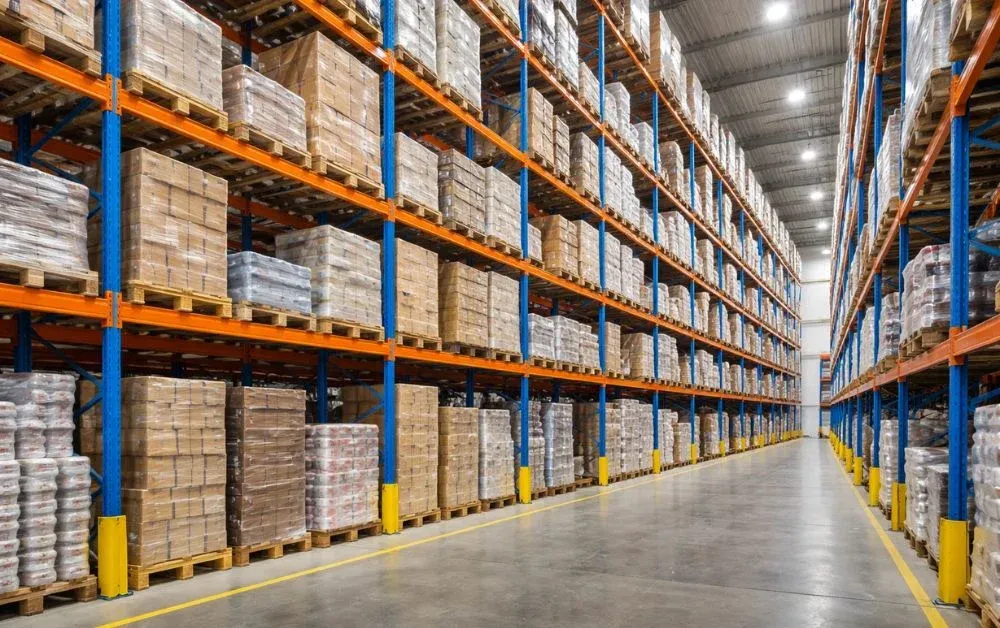
1. Selective Pallet Racking
One of the most common systems in warehouses, selective pallet racking allows for direct access to every pallet location. Usually made up of upright frames and horizontal beams, the configuration is done in rows with aisles between them.
Key features & benefits:
- Each pallet can be accessed individually, which makes it best for operations with many different SKUs or high turnover.
- Flexible in height and beam adjustment.
- Compatible with forklifts, able to support several different pallet sizes and weights.
When to use it:
- When you need flexibility, accessibility, and speed of movement of goods.
- For mid‑density storage where you’ll pick and rotate pallets frequently.
- Operating in warehouses where the layout may change over time.
Considerations:
- Requires more aisle space than very high‑density systems.
- For the most efficient usage, beam heights and load ratings should be planned with forklift access in mind.
2. Drive‑In / Drive‑Through Racking
These systems are designed for high density. In a drive‑in, forklifts drive into deep racks on one side; in a drive‑through, there is access from both ends. The pallets are placed onto rails or supported beams, and are typically in a Last‑In, first‑Out configuration.
Key features & benefits:
- It maximizes floor space by reducing the number of aisles.
- Excellent for high‑volume storage of similar items or bulk inventory.
- Lower cost per pallet position as compared to selective racking.
When to use it:
- When you store many identical pallets or low‑turnover items.
- For deep stacking in cold storage, ambient warehouses, or bulk‑storage zones.
Considerations:
- Access to individual pallets is more limited: Inventory rotation must be managed.
- Requires the forklifts to go deeper into the rack, so operator skill and safety become critical.
- For through-type systems, the planning of traffic flow and loading/unloading ends becomes vital.
3. Narrow Aisle & Very Narrow Aisle (VNA) Racking
Narrow aisle racking reduces aisle width by using specialized forklifts or turret trucks that reach higher and can operate in tighter spaces. This is a way to increase storage density without moving toward full automation.
Key features & benefits:
- More storage capacity within the same footprint: more racks, fewer aisles.
- Ideal for warehouses with high ceilings that want to acquire vertical space.
- It gives a good compromise between accessibility and density.
When to use it:
- When the floor space is expensive or limited.
- When you want more pallet positions without going fully automated or drive‑in style.
- When you have trained operators and appropriate handling equipment.
Considerations:
- Equipment costs are generally higher with special forklifts.
- Requires more planning and safety controls: forklift height, load weight, rack strength.
- The racks should be sturdy, and the mounting should meet tighter tolerances.
4. Push‑Back and Pallet Flow (Gravity) Racking
These systems use gravity or an incline to move pallets. In push‑back systems, pallets are placed on nested carts; in pallet flow or gravity flow systems, pallets roll down an incline on wheels or rollers. Both are suited for high‑density storage with first‑in/first‑out (FIFO, in the case of flow) or last‑in/first‑out (LIFO, in the case of push‑back).
Key features & benefits:
- Very high density since the number of aisles is reduced.
- Good automation potential, efficient for repetitive loads.
- Improves throughput in high‑volume storage.
When to use it:
- For high‑volume, predictable inventory (e.g., a few SKUs in bulk).
- For high-turnover lanes requiring FIFO, especially for pallet flow.
- In large distribution centres with long runs of pallets.
Considerations:
- More expensive up‑front and requires heavier infrastructure.
- Pallet condition and standardization become more critical.
- Maintenance and reasonable operational procedures are vital.
5. Cantilever Racking
Designed for the storage of long, odd-sized, or bulky items, such as pipes, timber, steel bars, furniture, etc., cantilever racking consists of horizontal arms mounted on a vertical frame without front uprights so that access is unobstructed.
Key features & benefits:
- Ideal for long or awkward loads that won’t fit on standard pallets.
- Easy loading via forklift from the front.
- Flexible configuration, suitable for outdoor or semi-outdoor zones.
When to use it:
- For storage of items such as steel beams, rebar, timber boards, or parts of furniture.
- Where palletized storage is not suitable or the loads exceed normal racking dimensions.
- When you need rapid mechanical access without impediments in the front.
Considerations:
- Load capacity has to be carefully engineered because of overhanging arms.
- Weather exposure may require corrosion-resistant finishes if stored outside.
- Planning is needed to ensure that upright frames do not interfere with the building structure or forklift clearance.
Suggested Read-What Is a Racking System for Warehouse and Why Is It Important?
6. Mezzanine Racking Systems
Where warehouse ceiling height is under–utilized, mezzanine racking systems enable the addition of intermediate floors or tiers. Such floors are either supported through rack structures – also referred to as rack–supported mezzanines – or building structures.
Key features & benefits:
- Doubles or triples usable floor space without expanding the building footprint.
- Allows storage plus picking or office space above.
- Integrates well with other racking systems to create multi‑tier solutions.
When to use:
- When vertical space is available but unused:
- When you need additional storage and operational zones-e.g., packing and picking.
- When flexibility and scalability are required with operational growth.
Considerations:
- Floor load ratings, stair or lift access, safety railings, and adherence to building codes are crucial.
- Longer installation time and greater complexity than simple racks.
- Coordination with the building owner/management may be required, especially for structural support.
7. Mobile Shelving & Bolt‑Free Shelving (Light Duty)
Not strictly pallet racking, but very relevant to warehouses, archives, retail back‑rooms, and smaller storage zones. The systems include movable shelving units on rails, known as mobile shelving, or bolt‑free clip‑together shelving that can be rapidly reconfigured.
Key features & benefits:
- It optimizes floor space by reducing fixed aisles.
- It can be very quick to install, reconfigure, or relocate.
- Ideal for smaller items, cartons, archive boxes, or retail stock.
When to use it:
- In slow‑turnover storage, document archives, or supplementary storage zones.
- When frequent reconfiguration is required.
- For non-palletized items, lighter loads or smaller SKUs.
Considerations:
- Not suitable for heavy‑load pallets unless specified as heavy‑duty mobile racks.
- Requires careful planning for load ratings and floor strength if rails are involved.
- Access may not be as intuitive compared to fixed shelving systems.
How to Choose the Right System
Choosing the proper racking system requires the balancing of a number of criteria:
- Inventory characteristics: size, weight, shape, palletization, turnover rate.
- Storage density versus accessibility: Do you have high-density needs, or do you need easy access?
- Building characteristics: include floor space, ceiling height, column spacing, and building obstructions.
- Material handling equipment: includes forklift type, aisle width, and operator training.
- Future Growth: Will your inventory or product mix change? Do you need flexibility?
- Safety and compliance: load ratings, seismic, building regulations, sustainable materials.
- Budget and ROI: Consider cost per pallet position, installation time frame, and maintenance
- Supplier expertise: A knowledgeable partner can design, supply, and install for your specific operation.
Regarding that last point, the proper selection of vendors is essential. As one of the premium racking and shelving suppliers in the UAE, Stormat Systems & Solutions offers consultancy, custom design, installation, and after-sales support that enable warehouse operators to make optimum choices and smoothly implement them.

Conclusion
The selection of the proper warehouse racking system goes over and above a simple act of buying steel; rather, it is to do with optimizing your storage, handling, and operations. Be it Selective Pallet Racking, Drive‑in systems, Narrow Aisle Racks, Mezzanines, or Shelving Zones, you will benefit from partnering with a trusted racking and shelving supplier in the UAE. In that space, Stormat Systems & Solutions stands apart, combining deep industry experience with tailored solutions that meet real warehouse challenges. By understanding the different types of racking systems, aligning them to the needs of your facility, and working with a knowledgeable supplier like Stormat, you’ll set your warehouse up for greater efficiency, scalability, and long‑term success.