
Choosing the right warehouse racking layout can make or break your operations. In a fast-paced and competitive market like the UAE’s logistics and industrial sectors, getting your storage systems right is crucial. The right racking configuration can optimize space, improve safety, streamline workflow, and boost productivity. Here’s a guide to help you figure out the best layout for your warehouse, so you can work more efficiently and keep costs in check.
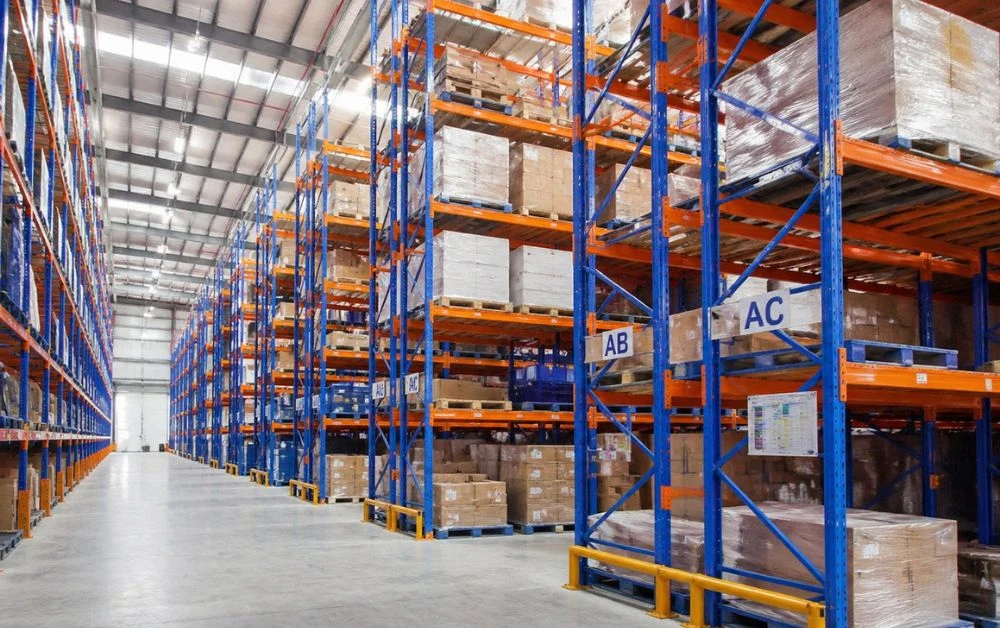
Understanding Warehouse Racking Layouts
In simple terms, the warehouse racking layout is all about how your racks, shelves, and storage systems are arranged. It’s what determines how your staff access inventory, how materials move through your warehouse, and how smoothly the overall operation runs. A thoughtful, well-planned layout not only reduces delays and prevents product damage, but also keeps things running safely and in compliance with regulations.
Here are some common types of racking layouts you’ll find in most warehouses:
- Selective Pallet Racking Layouts: These offer direct access to every pallet and are ideal for warehouses that handle a variety of inventory.
- Drive-In or Drive-Through Layouts: These maximize storage density for large quantities of similar items, typically used for bulk storage.
- Push-Back and Pallet Flow Systems: These help store products efficiently by using gravity to move items, reducing manual handling time.
- Mezzanine or Multi-Tier Layouts: These systems add additional storage space vertically without needing to expand the warehouse’s footprint, perfect for facilities with high ceilings.
Key Factors to Consider in Layout Design
When designing your warehouse racking layout, it’s essential to consider several factors to make sure you’re choosing the right system for your specific wants:
1. Warehouse Space and Shape
The shape & size of your warehouse can significantly impact the racking system you choose. For narrow, rectangular spaces, selective racking with multiple aisles might be the best fit. On the other hand, if you have a wide, open area, high-density drive-in or push-back systems could be more suitable to make the most of the space available. Understanding your warehouse’s dimensions is crucial to maximize storage without overcrowding or leaving unused space.
2. Inventory Type and Volume
Different types of inventory require different racking systems. For example, heavy or bulky items will need heavy-duty racks and wider aisles for forklifts, while lighter items might do well on mobile shelving or pallet flow racks. High-turnover products—items you need to access often—should be placed closer to the picking or shipping areas for easy retrieval.
3. Operational Flow
Think about how your products will move through your warehouse from receiving to storage and finally to shipping. A smooth operational flow is key. Design your layout with high-traffic areas in mind and plan aisles in a way that minimizes congestion. Also, having cross aisles for forklifts or manual pickers can keep things moving quickly and safely.
4. Safety Considerations
Safety isn’t just a legal requirement—it’s a smart business practice. Your racking layout should take into account the width of aisles, load limits, protective barriers, and clear signage to avoid accidents. Make sure your layout complies with UAE safety regulations and international standards to keep your team and your inventory safe.
5. Future Growth and Flexibility
One thing to keep in mind is that your business will likely grow and change over time. As your inventory grows or your needs shift, having a flexible and scalable layout will save you a lot of headaches. Modular racking systems that can be easily expanded or reconfigured allow you to adapt without having to start from scratch.
Related read:-What Is a Racking System for Warehouse and Why Is It Important?
Popular Warehouse Racking Layouts in UAE
Selective Racking Layout
This layout is the go-to for most warehouses in the UAE because it’s simple and efficient. Each pallet gets direct access, so it’s great for diverse inventories. While it doesn’t always maximize space to the same degree as high-density systems, it’s super easy to use & perfect for environments where speed and accessibility are crucial.
Drive-In and Drive-Through Layout
Drive-in layouts let you store pallets in multiple depths with minimal aisles, helping maximize storage. If you go with a drive-through system, you get the added benefit of access from both ends, which works well for first-in, first-out (FIFO) inventory management. These systems are ideal for bulk storage of uniform products but need careful planning to ensure safety and efficiency.
Pallet Flow Layout
Pallet flow racks use gravity to move products from the back to the front, which reduces manual handling and ensures consistent inventory rotation. This system is particularly useful for warehouses dealing with fast-moving products or those in the cold storage and FMCG sectors where inventory turnover is a key concern.
Mezzanine and Multi-Tier Layout
If you have a warehouse with high ceilings, mezzanine floors can provide additional storage levels, creating more space without expanding your facility’s footprint. These layouts are highly customizable and can be configured with a combination of shelving, racking, and even office space on the upper levels.

Conclusion
The right warehouse racking layout is all about balancing space utilization, operational efficiency, safety, & scalability. By evaluating your warehouse’s unique dimensions, inventory, and future needs, you can design a layout that boosts productivity, cuts costs, & lets for future growth.
For businesses seeking reliable solutions and expert guidance, warehouse racking suppliers in UAE like Stormat Systems & Solutions offer tailored designs and high-quality installation services to meet every warehouse need.